Showing posts with label Air Quality. Show all posts

Thursday, November 12, 2009

“Watch Your Speed... The EPA is Ticketing in Brazoria County v. Texas Commission on Environmental Quality”

Appearing in JNREL Vol. 21. No.1, the following comment was written by former staff member Haley Prevatt. Staff member Andrew Leung wrote the following abstract.


In deciding Brazoria County v. Texas Commission on Environmental Quality, 128 S.W.3d 728 (Tex. App. 2004), the Texas Appellate Court upheld legislation implementing environmental speed limits and other environmental regulations propagated by the Texas Transportation Commission as not violative of the Texas Clean Air Act, the Texas Transportation Code, and the Texas Administrative Procedure Act. "Watch Your Speed... The EPA is Ticketing in Brazoria County v. Texas Commission on Environmental Quality" examines the court's analysis and explains possible nationwide consequences of this decision.


The Federal Clean Air Act allows the Environmental Protection Agency ("EPA") to set national standards for cleanliness of ambient air, more commonly known as National Ambient Air Quality Standards ("NAAQS"). The NAAQS set permissible levels of pollutants in ambient air but do not contain a mandated method for obtaining that level. Because of the wide array of technological means available to meet NAAQS standards, each individual state has complete discretion to adopt a combination of control devices in order to meet national standards for ambient air.


In Brazoria County, the EPA found levels of pollutants elevated beyond the permissible NAASQ amounts in eight Texas counties in the Houston-Galveston area. The EPA subsequently ordered Texas to create a feasible plan to reduce pollutants to acceptable levels. In response, the Texas Commission on Environmental Quality ("TCEQ") implemented regulations which had three primary effects: (1) reducing of speed limits on state highways to 55 mph; (2) setting forth a vehicle inspection and maintenance program; and (3) prohibiting use of commercial lawn-maintenance equipment at times other than afternoon hours.


Brazoria County, one of the eight counties affected by the TCEQ regulations, brought suit against the TCEQ alleging that it exceeded its authority in promulgating the aforementioned regulations. The Court found that the implementation of the environmental speed limits ("ESLs") was an authorized act because the legislature later acted to ratify the ESLs statutorily. With respect to the vehicle inspection and maintenance and lawn-maintenance regulation, the Court held that they were beyond the scope of the Texas legislation because the regulations were implemented to meet federal NAAQS limitations.


Because the Court's decision in Brazoria County is legally sound and based primarily on precedent, it is unremarkable in that manner. One facet of the case left unaddressed by the court is the possible policy implications of the case. Here, residents of Brazoria County and eight neighboring counties were merely inconvenienced by the environmental regulations promulgated by the TCEQ. The Court's decision leaves open the possibility of more invasive regulation in Texas and the other states of the Union, perhaps even to the extent that the takings clause of the United States Constitution might be implicated.

Wednesday, October 28, 2009

Environmental Law Institute Releases Report Regarding School Indoor Air Quality


The following post was written by staff member Meghan Jackson Tyson.


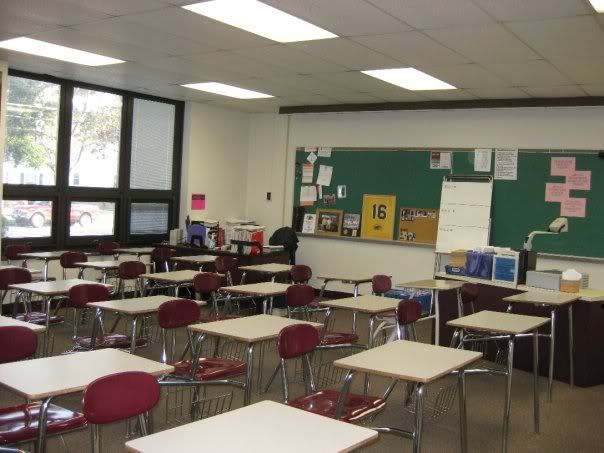
In an effort to keep up with the No Child Left Behind Act, school officials are constantly reevaluating their curriculums and contemplating new and innovative ways to encourage learning and improve performance on standardized tests. In the era of the almighty test score, it is easy for school officials to stray away from the basics. However, in a recent report released by the Environmental Law Institute, getting back to the basics might be just the answer for which school officials are looking. Tobie Bernstein, Environmental Law Institute, School Indoor Air Quality: State Policy Strategies for Maintaining Healthy Learning Environments (2009), available at http://www.elistore.org/reports_detail.asp?ID=11357.


The report, released in September, states that there is a direct correlation between school indoor air quality and student productivity. Id. at 1-2. Specifically, the report identified three major areas of concern, which include "ventilation, moisture control and the control of other pollutant sources." Id. at 3. In an effort to improve air quality in school districts nationwide, the report explores four different strategies for state policymakers to consider.


First, the report suggests tackling the problem of poor air quality through state health laws. Id. at 6. Specifically, the report recommends the adoption of inspection laws to identify and correct the following problems in public schools: roofs and gutters, water intrusion, water damage/moisture control, HVAC systems, pest infestation control, animals in classrooms, chemicals, carpeting and temperature/humidity control. Id. at 9.


Second, the report discusses the use of state labor laws to regulate air quality in schools. Id. at 13. The report suggests the implementation of an OSHA-type law at the state level to ensure the safety of public workplaces, including public schools. Id. at 13.
The benefit of this strategy, as pointed out in the report, is that the state will qualify for federal funding so long as the state's standards meet basic federal requirements. Id. at 13.


Third, the report focuses on state education laws as a source for addressing air quality problems. Id. at 20. This strategy also involves a rigorous inspection process; however, unlike state health laws, education laws will require school districts to perform their own inspections. Id. at 20. The inspections will focus on roofing, building structural elements, plumbing, heating and cooling, and ventilation. Id. at 22.


Finally, the report suggests that local school districts should "develop and implement their own Indoor Air Quality Management Program." Id. at 28. This strategy is similar to the previous policy approach, and it also includes the development of an internal reporting system to oversee inspections and entertain complaints and suggestions from parents. Id. at 30.


As the report indicates, implementing these policies at the state level will improve air quality in school buildings, thereby improving the health of students and staff. This, in turn, will undoubtedly increase productivity and enhance student performance across the board.