Monday, September 3, 2012
Doping Horses
Wednesday, March 7, 2012
APHIS Announces New Procedures to Regulate Contagious Equine Metritis
By: Jocelyn Arlinghaus, Staff Member
The beginning of 2012 has heralded new developments in the fight to eliminate contagious equine metritis (CEM) in the United States. CEM is a venereal disease common to horses caused by the bacterium Taylorella equigenitalis.[1] It is considered extremely dangerous due to its highly contagious nature.[2] The disease is typically transmitted via sexual intercourse during the mating process, but it may also be transmitted through artificial insemination or contact with hands or instruments that have been contaminated.[3] Common symptoms include vaginal discharge, uterine inflammation, and temporary infertility.[4] Stallions show no physical signs of CEM, which makes detecting and controlling the disease before it spreads extremely difficult.[5] During breeding season, a stallion often infects several mares before the presence of the disease is discovered.[6]
CEM was first diagnosed in England in 1977, but had spread to the United States by 1978 with reports documented in central Kentucky and Missouri.[7] The disease was treated and thought to be eliminated from the United States prior to 2006, when two imported stallions in Wisconsin tested positive for the CEM bacteria.[8] Another outbreak was confirmed in December 2008, when five mares and 23 stallions in eight states tested positive for the CEM bacterium.[9] Although the 28 initially discovered horses were cured of the disease, another 977 horses were exposed to Taylorella equigenitalis in the outbreak, which spanned 48 states.[10] CEM was subsequently discovered in Arabian stallions in May 2010 in California and in July 2011 in Arizona.[11] The USDA’s National Veterinary Service (NVSL) has confirmed that in all cases the infected stallions were contaminated prior to arrival in the United States.[12] Interestingly, the strain of the isolated bacterium in these new cases did not match any strains previously found in the United States, which indicated that the multiple outbreaks were unrelated and therefore developed as a result of separate equine imports from foreign countries.[13] Efforts to eradicate the recent string of outbreaks in the United States continue. Because mares can only be bred during certain times of the year, CEM can substantially impact equine reproductive efficiency.[14] If the disease continues to stabilize in the United States, the equine industry will face great economic losses.[15]
The United States Department of Agriculture Animal and Plant Inspection Service (APHIS) has been taking steps to provide additional safeguards against spreading CEM to horses in United States through importation of infected horses. In 2011, APHIS amended the regulations concerning the importation of horses from countries affected with CEM. The new standards require test mares and imported stallions above a certain age to undergo an additional CEM test to improve the chances of detecting the disease.[16] APHIS has also imposed stricter certification requirements for imported horses 731 days old or less and added new test measures for imported horses more than 731 days old. [17] Yearlings and weanlings require proof that they have not been bread to other horses through artificial insemination in order to be imported.[18]
On January 10, 2012, APHIS announced that it will post lists of states approved to receive imported horses from high-CEM foreign regions to its website rather than including them in the Code of Federal Regulations.[19] This change will not affect the criteria that APHIS uses to determine whether a foreign region should be added or removed from the list or criteria used to approve states to receive horses imported from high-CEM foreign countries.[20] Because these lists will not continue to appear in the Code of Federal Regulations, updates are no longer required to be legislated. [21] This new procedure will enable APHIS to more quickly identify changes in the CEM status of foreign regions and approve states to receive horses from foreign regions where CEM is known to exist.[22] Additionally, this will simplify the process of informing the equine community and the public of any concerns of possible CEM exposure to horses in certain areas of the country. APHIS considers this change to be another step toward eliminating the string of CEM outbreaks and improving the welfare of horses and the equine industry.
Wednesday, April 21, 2010
Jockey Safety: Mandatory Medical Information Reporting
Recently, Keeneland Race Track in Lexington, Kentucky announced that submission of jockey medical information is now mandatory at the track prior to entering a race. Id. While numerous tracks make such submissions voluntary, Keeneland is the first track to mandate it. Id. However, since Keeneland's track physician, Barry Schumer, estimates that prior to the mandate approximately 95% of jockeys submitted their medical information voluntarily, it seems that making this a requirement will create no significant problems with compliance. Id.
The most significant concern with such a requirement would likely be privacy issues if some jockeys do not wish to provide certain medical information. Such privacy issues are protected by this system, however. The Jockey Health Information System can only be accessed with an identification code by medical professionals. Id.
With such a high number of injuries being incurred by jockeys on racetracks and significant compliance already, mandating submission of medical information is a move in the right direction regarding jockey safety. With success stories already arising from access to this reporting system, other tracks are likely to follow Keeneland's lead and make submission of jockey medical information a requirement. But jockeys should be aware that this is a new requirement that may be catching on nationwide. They will need to determine whether reporting their medical information is voluntary or mandatory at a particular track prior to racing there and deal with any problems they might have with this beforehand, so as not to be prevented from racing.
Thursday, April 15, 2010
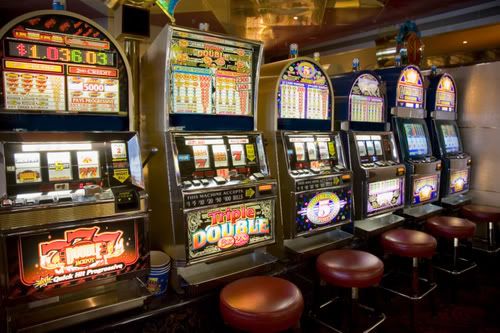
Legislature approached with differing slot machine plans for Horse Industry
Disclaimer: The following post reflects the views of the author and not that necessarily of KJEANRL.
Governor Beshear's slot plan was not received well by the House or Senate. House Speaker Greg Stub filed a competing plan shortly after receiving Beshear's, which would spend the tax revenue from slots on a massive school construction program, instead of helping to erase the shortfall in the next two years budget, as Beshear had proposed. Janet Patton, Beshear Slots Plan Gets Tepid Reception, Lexington- Herald Leader Jan. 21, 2010, available at http://www.kentucky.com/2010/01/21/1104634/beshear-slots-plan-gets-tepid.html (last April 2, 2010). House Democrats have caucused to get support for Beshear's proposal, which would allow racetracks to add electronic slots under existing lottery laws. Id. However, although no official vote was taken, it appears that there was not much sentiment in favor of Beshear's bill, with one Representative calling the plan "delusional". Id.
Stumbo said of his own competing bill "over a billion dollars worth of construction… best thing we could do for the budget is create jobs all over the state". Id. Stumbo said in his bill anticipates that 400-500 million in state tax revenues will be collected from slots over the next two years when all facilities are fully up and running. Id. Beshear said temporary slots could be up and running within six months, and projected 295 million in tax revenues for the first 18 months of slots. Id. Beshear's plan also takes into account the new casino's in Ohio, which is estimated to cut revenues at Turfway Park by 40%. Id.
The horse industry seems to be very supportive of Beshear's and Stumbo's proposals, in a large part because the horse industry is facing significant competitive challenges. Id. However, while seemingly supporting both Beshear and Stumbo's bills, many in the horse industry are willing to talk with others proposing plans in an effort to help the struggling industry, and it seems that slots may be the best way to do this. Id.
Wednesday, February 17, 2010
PROPOSALS TO EXPAND KENTUCKY GAMBLING MET WITH LITTLE ENTHUSIASM FROM LEGISLATURE OR INDUSTRY
The Kentucky legislature is considering several proposals concerning the addition of slots at racetracks. Janet Patton, Beshear Slots Plan Gets Tepid Reception, Lexington Herald-Leader, Jan. 21, 2010, available at http://www.kentucky.com/
/horse_racing/story/
1104634.html. Governor Steve Beshear's bill would place electronic slot machines at racetracks in accordance with Kentucky's present lottery statutes. Id. Beshear says his proposal would generate $295 million in tax revenue within its first 18 months. Id. Keeneland spokesman Jay Blanton said of the plan, "We appreciate the governor's strong and continued support for the state's signature industry, which is facing significant competitive challenges." Id. However, a recent House democratic caucus revealed little enthusiasm for the bill; it was described as "delusional" by State Rep. Mary Lou Marzian. Id.
House Speaker Greg Stumbo, who asserted that there is "no sentiment" for Beshear's proposal, is pushing his own competing plan. Id. Stumbo claims that his proposal would generate $400-$500 million in revenue within two years, which would then be spent on a school construction project in an effort to boost Kentucky's budget by creating jobs. Id.
While both bills suppose that gambling can be expanded under current lottery laws, a third plan, approved Jan. 20 by a Senate committee, demands an amendment to Kentucky's constitution to allow gambling to be expanded. Id. As a proponent of this approach, Senate President David Williams is skeptical that bills like Beshear's, operating under present lottery statutes, could pass in either the House or the Senate. Id.
Ultimately, though, Williams' proposal has not quelled the concerns of the horse industry. Id. Blanton remarked, "…our concern about a proposed amendment remains the same: our challenges require immediate relief; any proposed amendment that we've seen thus far would, at least, take years to afford any assistance to the industry. That hasn't changed." Id.
Monday, January 25, 2010
Horse sales tax exemption: Good for the industry, bad for the state?
According to a recent article in the Lexington Herald-Leader, some Kentucky citizens have begun to question tax exemptions provided to horse sales and the impact of this exemption on the state's economy. Janet Patton, Horseman say exemption crucial for Ky., Lexington Herald-Leader, Jan. 17, 2010, available at http://www.kentucky.com/horse_racing/story/1099255.html (last visited Jan. 20, 2010). Kentucky Revised Statute § 139.531 provides exemptions for sales tax and use tax for the sale or use of horses made for breeding purposes only as well as for the sale of horses less than two years of age bought by out-of-state residents who take the horses out of Kentucky. Ky. Rev. Stat. Ann. § 139.531(2) (2009).
Based on estimates supplied by the state, this practice has cost the Kentucky almost $220 million in lost revenue from 2004 to 2010. See Patton. For example, Sheikh Mohammed bin Rashid al Maktoum of Dubai, Kentucky's top buyer of thoroughbreds, has purchased more than $60 million in broodmares at Keeneland's fall sales since 2002. Id. Had these purchases been taxed at Kentucky's rate of six percent, they would have generated more than $3.6 million by themselves. Id. During this time of budget short-falls and overall cut-backs in our state, some suggest that it is time to reevaluate Kentucky's tax code.
However, others worry that that taxing more sales would cost Kentucky a competitive edge in the horse industry, which is already hurting. Those in the horse industry are afraid that if Kentucky imposes a sales tax, buyers will simply go to other states that offer exemptions, including Maryland, New York, California, Florida, Pennsylvania and Texas. Id. Additionally, those who support keeping the tax exemptions point out that the horse industry is taxed in ways that other agriculture sectors are not. Jay Blanton, spokesman for Keeneland, explained "that sales of many horses, including those of racehorses, are taxed, and that horse farms pay sales taxes that other agricultural enterprises don't. Feed and hay for cattle, for instance, are exempt while the same products for horses are taxed." Id.
During these continued tough economic times for people in Kentucky and across the country, these issues regarding tax reform are surely to be debated by our legislators in the near future.
Friday, January 22, 2010
Senator Thayer Pulls in the Reins on his Gambling Amendment
Republican Senator Damon Thayer called off a committee vote on his proposed constitutional amendment on January 13. Janet Patton, Senator Calls Off Committee Vote on Gambling Amendment, Lexington Herald-Leaser, Jan. 14, 2010, available at http://www.kentucky.com/news/state/ story/1094981.html (last visited Jan. 17, 2010). His proposed amendment, if passed by the full Senate, would allow video lottery terminals in up to seven counties that have racetracks, but the racetracks would have to compete for this license. Id. This bill was expected to pass the Senate State and Local Government Committee; however, it was unlikely to pass a floor vote by the full Senate. Id. Thayer believed that delaying the bill would give him more time to gain additional support for his bill. Ron Mitchell, Thayer Delays Committee Vote on Gaming Bill, January 14, 2010, available at http://www.bloodhorse.com/horse-racing/articles/54796/thayer-delays-committee-vote-on-gaming-bill (last visited Jan. 17, 2010.) Thayer said that he "wanted to see if there is anyone else that is willing to come to the table." Id.
Many leaders and racetracks of the horse industry have opposed Senate Bill 21 because "it does not guarantee that tracks get expanded gambling." Janet Patton, Senator Calls Off Committee Vote on Gambling Amendment, Lexington Herald-Leaser, Jan. 14, 2010, available at http://www.kentucky.com/news/state/story/1094981.html (last visited Jan. 17, 2010). But, Thayer said he has heard from a few "rank and file" horsemen that are disappointed with the horse industry opposing his bill. Id. Thayer explained that delaying the vote until later this month will hopefully translate into bipartisan support. Id. "Gambling Licenses are something of value to the people of Kentucky. A competitive bidding process is likely to result in higher fees to the state," Thayer explained. Id. Furthermore, he said that increased purses from the slots would bring more racehorses, which would generate revenue for the tracks. Id.
Senator Ed Worley has said no Democrat will vote for Thayer's bill. Id. If Worley's statement is true, Thayer's bill will not pass because a constitutional amendment needs at least 23 votes in the Senate to pass. Id. Only time will tell if Thayer's amendment can gain enough bipartisan support to pass through the Senate.
Wednesday, December 2, 2009
Pony Up: Gov. Beshear Predicts Video Slot Machines May Be Legalized at Kentucky Racetracks in 2010
Kentucky has, in various forms, debated the legalization of gambling, particularly in the form of video slot machines at racetracks, for more than a decade. Beth Musgrave & Janet Patton, Beshear Wants Slots Bill by Winter, Lexington Herald-Leader, Nov. 5, 2009, available at http://www.kentucky.com/181/story/1006050.html?storylink=omni_popular (last visited Nov. 17, 2009). After Ohio residents passed a referendum on November 3, 2009, allowing casino gambling in four major cities, including Cincinnati, the efforts to legalize gambling gained momentum. Id. Governor Beshear issued the following statement after the referendum passed: "Clearly, the time to act on expanded gaming is now.… Ohio citizens are going to reap the benefits of thousands of new jobs and millions of dollars in tax revenue. Ohio's decision reinforces the urgency to pass the video lottery terminal bill I proposed earlier this year." Id.
In addition to questionable popular support, the proponents of legalizing gambling have faced the criticism that the move can only legally be made through amendment of the state constitution, an argument that Governor Beshear labels as a stall tactic that cannot be tolerated as the Kentucky horseracing industry faces tough times. Id. Although last term a bill passed the democrat-controlled House, but did not get out of committee in the Senate, Governor Beshear now predicts that the bill would pass both houses in 2010, after changes in membership. Ryan Alessi, Beshear: Slots Will Pass the Full Senate if Given a Chance, Bluegrass Politics, http:// bluegrasspolitics.bloginky.com/2009/11/17/beshear-slots-will-pass-the-full-senate-if-given-a-chance/ (last visited Nov. 17, 2009). Speaking of the impact on the horse industry, which would receive a cut of profits under the proposed bill, Governor Beshear stated: "In my opinion we must protect this industry. Why? Not because there are two to three rich guys in it. But because there are 100,000 hard working Kentuckians who work in that industry every day." Id. Only time will tell whether the bill will in fact pass the legislature, and if so, only the courts will tell if the bill passes constitutional muster.
Wednesday, November 4, 2009
Alternative Gaming Revenue: Good for Kentucky’s Horse Industry?
The horse industry is a vital part of Kentucky's economy. In fact, the industry is alone responsible for 80,000-100,000 jobs in the state. Kentucky Equine Education Project, Why Kentucky's Horse Industry Needs Support (2007), available at http://www.horseswork.com/pdf/why_to_support.pdf. However, this industry is currently threatened by increased competition from surrounding states that allow alternative gaming revenue. Because revenue from casino style gambling at racetracks boosts purses and breeding incentives, horses traditionally bred and run in Kentucky are now being taken elsewhere because of the opportunity to earn greater amounts of money.
Kentucky currently has five thoroughbred racetracks in the state: Churchill Downs in Louisville, Keeneland in Lexington, Ellis Park in Henderson, Turfway Park in Florence, and Kentucky Downs in Franklin. Gregory A. Hall, Ky. horse tracks request fewer racing dates in 2010, COURIER-JOURNAL, Oct. 26, 2009, available at http://www.courier-journal.com/article/20091026/BUSINESS/910260343/Ky.+horse+tracks+request+fewer+racing+dates+in+2010. Kentucky tracks have already requested fewer racing dates for 2010 due to decreased revenue, and if things continue in the current fashion, it could mean the end of one or several of these historic venues. Id.
Although the racing industry is suffering nationwide, several states have managed to avoid some of the problems that Kentucky is currently experiencing through the introduction of alternative gaming. According to statistics found in the American Gaming Association's 2009 State of the States report, 12 other horse racing states, including Indiana and West Virginia, allow patrons at the track to wager on video gambling machines, slot machines or other casino-style games. American Gaming Association, State of the States 2009: The AGA Survey of Casino Entertainment (2009), http://www.americangaming.org/assets/files/aga-sos2009web.pdf. This type of expanded gaming has allowed those states to increase purse sizes, attracting many of Kentucky's thoroughbreds to race at those locations rather than in Kentucky.
The size of the purse that racetracks can offer directly affects the quality and quantity of horses that run at the track and the bettors and money that come in to the state. Comparing the purses at Kentucky's Turfway Park and Pennsylvania's Presque Isle Downs, it is clear that purses increased dramatically after the introduction of casino betting in Pennsylvania. Kentucky Horsemen's Benevolent and Protective Association, Inc., Understanding Kentucky's Horse Industry (2009), available at http://www.kyhbpa.org/resources/IndustryHandout.pdf. High purses also mean more jobs for residents of the state. Id.
Additionally, many states have greatly increased purses for horses which are born in that state. See supraAmerican Gaming Association. This practice entices horse owners to move their breeding operation to certain states to ensure that their horses are eligible for the state-oriented prizes, thereby affecting Kentucky breeding farms which have experienced reduced stallion and foaling or broodmare income. Id.
This past June during a special legislative session, Kentucky's House of Representatives passed the Video Lottery Bill which would have allowed slot machines at racetracks. John Cheves, Slots bill dies in committee, LEXINGTON HERALD-LEADER, June 23, 2009, available at http://www.kentucky.com/302/story/839602.html. However, the bill soon died in the Senate. Id. According to Senator Tim Shaughnessy, D-Louisville, the issue is not over: "[t]he reality is, history is on our side. This is eventually going to happen, whether it's done by an act of the legislature or put before the voters of Kentucky for a formal vote. It may be stopped today, but the issue isn't if this happens, it's when this happens." Id.
According to Attorney General Jack Conway, however, it doesn't appear necessary to send the decision to Kentucky voters. In an opinion issued by Conway in June responding to a request by State Representative Jody Richards, Conway found that the "General Assembly may authorize the Kentucky Lottery Corporation to establish, license, regulate and tax video lottery terminals at designated horse racing tracks under Ky. Const. § 226(1) without further amendment to the Kentucky Constitution." Video Lottery Terminals at Kentucky's Horse Race Tracks, Op. Att'y Gen. 09-004 (2009), http://www.law.louisville.edu/sites/www.law.louisville.edu/files/OAG09004.pdf. While this opinion is merely advisory and not legally binding, it represents a well-reasoned argument analyzing Kentucky's laws and furthering the idea that the General Assembly is permitted to make the decision on slots without putting it on the ballot, allowing them to more quickly respond to the urgent situation with Kentucky's horse industry.
The bottom line is that horses help create and support jobs in Kentucky, and it is important for our legislators to support the industry that is so vital to our local economy. Ultimately, if Kentucky allows expanded gaming at the state's racetracks, it will increase revenues, thereby increasing purses and breeding benefits, and will help keep horses and jobs in Kentucky.
Thursday, October 8, 2009
Industry horsemen’s groups have the power to prevent off-site betting at Horsetracks
This post was written by staff member Nick Kloiber.
Racetracks in Kentucky have been in the news due to their place in the recent legislative battle over slot machines. Some tracks have said that, because of the dire financial times, they might have to close without the added draw of slot machines on site. Other tracks have threatened to reduce purses in an effort to cut costs. Turfway Park is one such racetrack, and it seems their solution might actually hurt them more than they originally thought, quickening a rush to closure.
The racetrack has proposed a 5% cut in all purses for the upcoming year compared to 2008, a total cut of about $700,000. Gregory Hall & Jenny Reese, Turfway, Horsemen dispute purse cut, THE COURIER-JOURNAL, Aug. 26, 2009, available at http://www.courier-journal.com/apps/pbcs.dll/article?AID=2009908250345. Without an agreement with the horsemen's group, simulcast betting on Turfway's races at other tracks nationwide could be prevented by those state's horsemen's groups. Id. The law that gives these groups this power is called the Interstate Horseracing Act of 1978. Congress decided that the Federal Government needed to ensure interstate cooperation in the area of horserace simulcasting, "in order to further the horseracing and legal off-track betting industries in the United States." 15 U.S.C.S. § 3001 (LexisNexis 2009). That is a straightforward proclamation of Congress's intent and position on regulation in the industry. The way they decided to regulate, however, reveals many questions.
Racetracks must get, among other things, consent from the host racing association in order to accept off-site betting. 15 U.S.C.S. § 3004 (LexisNexis 2009). As "a condition precedent to such consent, said racing association . . . must have a written agreement with the horsemen's group, under which said racing association may give such consent, setting forth the terms and conditions relating thereto." Id. Why did Congress give such a power to industry groups? Is it a legislative form of a collective bargaining grant? State's horsemen's groups can effectively band together and say they won't accept simulcasting from a track unless a contract is in place between that racetrack and its horsemen's group. With such a group effort, these groups have the power to prevent tracks from changing purse payouts or other contract issues with their local group, for fear that the changes will be rejected and their simulcast business will also be blocked.
For a track in Turfway's predicament, their efforts to reduce costs to try and stay in business could very well cost them even more money due to no simulcast business, tightening what was already a precarious financial situation even more. Everyone is allowed to bargain for what they think they can get, but Congress giving these industry groups a one-handed bargaining chip doesn't help struggling racetracks trying to stay competitive and in business.
Monday, October 5, 2009
Ohio and Kentucky both debating the issue of racetrack gambling
This post was written by staff member Katie Huddleston.
The issue of allowing additional gambling at racetracks, usually in the form of slot machines, has been a hot topic in the equine industry since the recession that began last fall has lead to dramatic decreases in betting and earnings at such tracks. Janet Patton, Drop in wagering eats into Ky. Coffers, LEXINGTON HERALD LEADER, Sep. 22, 2009, available at http://www.kentucky.com/news/state/story/944936.html. Kentucky, home to the world's most renowned horse race, the Kentucky Derby, has yet to approve such racetrack gambling. Governor Steve Beshear called a special legislative session in June in an attempt to pass legislation that would allow slot machines to be added to the Kentucky racetracks: Churchill Downs (home of the Kentucky Derby), Keeneland Race Course and Turfway Park. However, the measure was unsuccessful. Now, neighboring Ohio is facing its own challenges in its attempt to institute video lottery terminals at equine racetracks.
Monday, September 21, 2009, the Ohio Supreme Court put a freeze on the implementation of slots at the state racetracks after Gov. Ted Strickland had "authorized the machines by executive order" and the legislature had included the expected revenue in its budget. Julie Carr Smyth, Ohio high court ruling puts racetrack slots on hold, LEXINGTON HERALD LEADER, Sep. 22, 2009, available at http://www.kentucky.com/101/story/944935.html. This measure was the result of a suit brought by the developers of LetOhioVote.org. The group sued the Ohio Secretary of State for ignoring submitted petitions asking for the issue of racetrack slots to be included on the ballot in November of 2010. While the state argued that the slots revenue was "shielded from the referendum process" by reason of being an appropriation, the court disagreed. Id. The court ordered Secretary of State Jennifer Brunner to accept the petitions submitted by LetOhioVote.org, which requires the Secretary to put the question of racetrack slots on the ballot next year. According to the court's ruling, until such vote is held, the slots plan cannot be implemented. The Ohio Lottery Commission, the Governor and legislators were disappointed with the result, which they claim will result in a "nearly $1 billion shortfall" in the state budget. Id.
The Supreme Court's decision could have wide-reaching implications on the issue of racetrack gambling across the country. In Kentucky, the decision may offer a reprieve. With betting at Kentucky racetracks falling as much as 17 percent last season, the added pressure of competing with Ohio tracks may be diminished by this delay in slot implementation. Janet Patton, Drop in wagering eats into Ky. Coffers, LEXINGTON HERALD LEADER, Sep. 22, 2009, available at http://www.kentucky.com/news/state/story/944936.html. The decision may also provide incentives for racetrack gambling opponents and proponents to consider seeking a referendum to finally decide the issue. In the meantime, Indiana tracks will fill the void temporarily left by Ohio and Kentucky by implementing racetrack slot gambling this year, monopolizing the market for such gambling in the region, at least for the time being. Id.
Wednesday, September 2, 2009
Coexisting: Track Betting and Lottery Prohibitions
Specifically, the Supreme Court of Michigan was called on in Rohan v. Detroit Racing Ass’n, 314 Mich. 326, 345 (Mich. 1946) to determine whether a state statute authorizing the licensing and “parimutuel betting” violated the Michigan Constitution providing that “the legislature shall not authorize any lottery nor permit the sale of lottery tickets.” MICH. CONST. of 1908, art. V, § 33. Should the court have found that horse betting did qualify as a lottery the import would have been to establish a precedent against horse betting and, by extension, the horse racing industry as a whole as a result of extensive lottery prohibitions in state constitutions across the country.
Thankfully the court held that gambling on horse races did not come within the penumbra of a lottery. The court based this primarily on the logic that lotteries were differentiated from horse races, and presumably other games of ‘chance’, on the premise that the result of a lottery could not be divined by “will… human reason, foresight [or] sagacity.” Rohan, 314 Mich. at 343(citing People v. Elliott, 74 Mich. 264, 267 (Mich. 1889). Chance was further emphasized as a necessary ingredient in the finding that a system was a lottery with the court emphasizing that, “[c]hance is an essential element of a lottery in the sense that, unless a scheme for the awarding of a prize requires that it be awarded by chance, it is not a lottery.” Id. at 344. The court held that betting on horse racing required more than mere chance, specifically that winners were not ones chosen at random but those who, by their own volition, “bet on the winning horse.” Id.
Since the winners were not determined by mere chance, but by exercise of “judgment and discretion” in selecting their entrants, the court found that pari-mutuel betting fell outside the purview of the lottery prohibition and was therefore not unconstitutional in that regard. Id. at 346. This holding is especially relevant as the 6th Circuit is home to our nation’s greatest reserve of equine potential which would have been unfairly stunted should horse betting have been found violate. Further, the court’s holding that horse betting was more than mere chance imparts an air of respectability, and perhaps glamour, to our equine industry, differentiating it from mere lotteries and other games of chance.
Monday, August 31, 2009
Reining in the Horse Racing Industry: A Proposal for Federal Regulation of Steroid Use in Racehorses
The use of performance enhancing drugs is a major and ongoing controversy in many professional sports involving human athletes, most notably Major League Baseball. In general, arguments surrounding these issues are invariably drawn to the effect these drugs have on the integrity sport itself, and the risk of harm that they have on the athletes. It should come as no surprise that many of the same problems permeate sports where nonhuman athletes compete, such as horse racing. Strong arguments have been put forth that improper use of anabolic steroids on racehorses both harms the endeavor of sport of racing itself and increases the risk of injury to the horse. Accordingly, many jurisdictions have “banned” use of these drugs. However, many steroids are distillations of naturally occurring chemicals found in the body, so regulation relies on setting reasonable thresholds where the occurrence of a concentration in excess of that threshold denotes a foreign supply. Furthermore, these drugs do have valid medical uses that regulation should not encourage trainers to neglect, less such regulation become an instrument of harm to the horse – a purpose in direct contrivance of its generally accepted goals.
In her KJEANRL note entitled “Reining in the Horse Racing Industry: A Proposal for Federal Regulation of Steroid Use on Racehorses,” Jennifer M. Jabroski explores the current regulatory schemes of four states with a well developed horse industry: Kentucky, California, New York, and Illinois. These schemes are then compared with each other and with the suggested standards set for by the Racing Medication Testing Consortium, which is a voluntary body composed of major stakeholders and technical experts for the horse racing industry. The result is inconsistency; inconsistency with the drugs, their therapeutic regulation, and the penalties associated with noncompliance. Such inconsistency is anathema to economic development of the sport and possibly the health and well being of the horses themselves. As it currently exists, horse racing relies heavily on the transportation of the same horse between multiple states. A diligent owner would be burdened with compliance to the multiple, and potentially contradictory, regulations of all relevant states. Alternatively, as many jurisdictions have failed to regulate at all, horses that only race in unregulated jurisdictions would be placed at greater risk.
Federal regulation is the solution that Ms. Jabroski proposes. Empowered by the commerce clause, Congress could prescribe a uniform regulation of steroid use for race horses. This uniformity would be of economic benefit to the industry by providing its participants with a clear and consistent standard of operation. Additionally, and perhaps most importantly, the integrity of the sport would be maintained both by direct fair standards of competition while simultaneously securing the safety of all racehorses within the United States.
Wednesday, August 19, 2009
Why are there no horse races at the Kentucky State Fair?

The Kentucky Supreme Court addressed the issue of whether or not a horse race on the state fair grounds is constitutionally permitted in the 1949 case of Hargett v. Ky. State Fair Bd., 216 S.W.2d 912 (Ky. 1949). Back in 1949 the Kentucky Fair Board leased a material portion of the fair grounds for a four year period with an option to renew the lease for a fourteeen year period to a private individual or leasee for the express purpose of conducting horse races. Id. at 914. A second private individual sued the Kentucky State Fair Board arguing that the lease was invalid and lost at the trial level. On appeal the private individual raised four issues:
"1. The attempted lease extends beyond the term of the Board, and is therefore void.
2. The State Fair Grounds belong to the public and may not be leased or sold without specific authority from the people, which has not been given by the General Assembly.
3. The lease authorizes private persons to operate exhibitions and attractions on State Fair Grounds for private profit, and under the control of private persons, in violation of the Statute directing 'exclusive control of such activities by the State Fair Board.'
4. The attempted lease and option is really intended to facilitate race track gambling of the State Fair Grounds, and is contrary to the express public policy of this Commonwealth.'" Id. at 913.
The Kentucky Supreme Court examined the purposes of the lease agreement and determined that the lease failed to meet the test applied at the time to a "contract authorizing the conducting of 'horse racing and related general purposes' on a part of the State Fair Grounds.'" Id. at 916. K.R.S. 230.040 only permits horse racing in the Commonwealth sanctioned by the State Racing Commission. Ky. Rev. Stat. Ann. 230.040 (repealed 1960).The authority of the Kentucky Racing Commission to regulate and license the running of horse racing was upheld in State Racing Commission v. Lationia Agricultural Ass'n, 123 S.W. 681 ( Ky. App. 1909). For failing to register for a horse racing license with the State Racing Commission the license was found to be void.
Additionally, the Kentucky Supreme Court held that as a general rule a board of public officers exercising a government function cannot make a contract extending beyond its term of office without express authority to do so. Id. at 918. The lease for horse racing in this case was to occur during the State Fair and to extend to times when the fair was not in operation as a form of generating revenue for the State. Id. The Kentucky Supreme Court found no problem with the State Fair Board's policy to authorize the use of its property for other than State Fair purposes but held that in this instance the State Fair Board went beyond its specific authority because it cannot issue horse racing licenses. Id. In the end the Supreme Court reversed the trial court's decision and held that the lease to the private individual was invalid. And the rest so they say is history.
In closing it is interesting to note that the statute granting the Kentucky Racing Commission sole authority over the licensing of horse racing in Kentucky was repealed in 1960. So now the question lingers... can horse racing return to the Kentucky State Fair? I suppose the real problem with that proposition is the lack of a suitable race track on the fair grounds. But that is a question for another day...